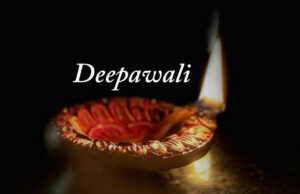
Deepawali is associated with a number of stories that work as themes and reminders to the collective memory of the race. Through these memories, they provide a collective continuity. That is their main and important function. Thus, Deepawali links the Hindu, Sikh, Buddhist and Jain traditions through special stories around this period. It also links the different yugas such as Samudra Manthan and the emergence of Dhanvantri, the god of health and immortality, of goddess Lakshmi, the goddess of inner and outer prosperity, in the Satyuga. It is also connected to the Yaksharatri, the play of vital energies controlling money. It connects Treta with the return of Rama to Ayodhya after victory over Ravana. Deepawali is also linked to the defeat of Narakasura at the hands of Sri Krishna in Dwapar. It is also associated with Govardhan Pooja and Bhai Dooj. Each of these stories is fascinating with its own significance.
Essentially, however, Deepawali reminds us of two things. First is the eventual triumph of truth and light over evil and darkness. Secondly, when the night is thick and dense, then, instead of lamenting, complaining and worrying, one should light up the lamp of aspiration, hope and faith to invoke and wait for the sun to emerge again. It is the dense night of Kali who destroys evil and prepares the earth for a happier journey ahead.
In the Ashram, the Mother used to give special Darshan on this day as Mahakali, the goddess of all the swift and flaming intensity of the Divine Love.
The best way, for the aspirants of a higher life is to quietly meditate upon the Divine Mother and pray for Her intervention to give us a swift and intense evolutionary push. One can read and meditate upon the Mahalakshmi and Mahakali aspects of the Divine Mother on this day.
Love
Alok Da