– The Synthesis of Yoga, p. 133
How can we “express that One Divine”?
It depends on the subject one wants to express: gods, men or things.
When one paints a picture or poses music or writes poetry, each one has his own way of expression. Every painter, every musician, every poet, every sculptor has or ought to have a unique, personal contact with the Divine, and through the work which is his speciality, the art he has mastered, he must express this contact in his own way, with his own words, his own colours. For himself, instead of copying the outer form of Nature, he takes these forms as the covering of something else, precisely of his relationship with the realities which are behind, deeper, and he tries to make them express that. Instead of merely imitating what he sees, he tries to make them speak of what is behind them, and it is this which makes all the difference between a living art and just a flat copy of Nature.
Mother contemplates a flower she is holding in her hand. It is the golden champak flower (Michelia champaka).
Have you noticed this flower?
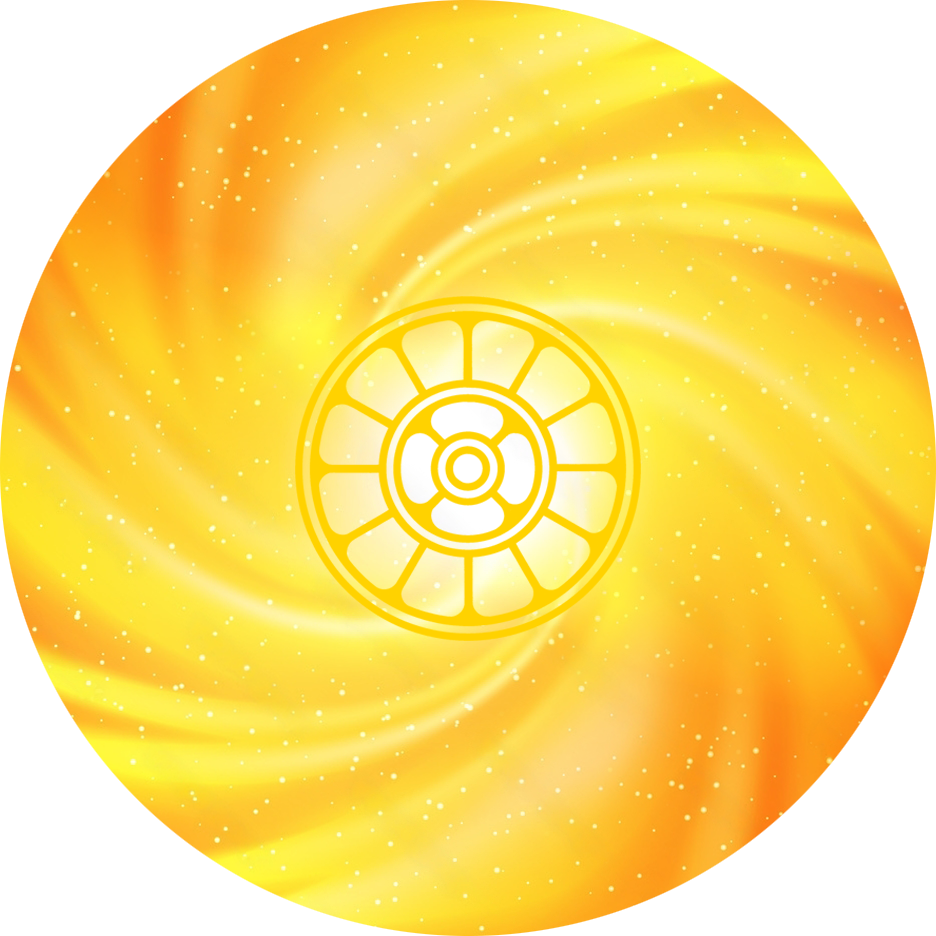
It has twelve petals in three rows of four.
We have called it “Supramental psychological perfection”.
I had never noticed that it had three rows: a small row like this, another one a little larger and a third one larger still. They are in gradations of four: four petals, four petals, four petals.
Well, if one indeed wants to see in the forms of Nature a symbolic expression, one can see a centre which is the supreme Truth, and a triple manifestation―because four indicates manifestation―in three superimposed worlds: the outermost―these are the largest petals, the lightest in colour―that is a physical world, then a vital world and a mental world, and then at the centre, the supramental Truth.
And you can discover all kinds of other analogies.
- The Mother
Source: CWM Vol. 08: Questions and Answers (1956) > May > 30 May 1956